

Who Was Abram/Abraham?
The Lives Behind the Bible’s Stories

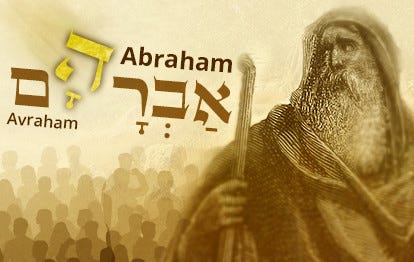
Note: Abram and Abraham are the same person, but God changed his name to reflect a significant shift in his life and mission.
Exploring the Historical and Biblical Context
In a world where people believed life was an endless cycle of repetition, Abram’s story broke the mold. He lived in a time when the status quo seemed unchangeable. Yet, his life introduced something entirely new—a different way of relating to God and, ultimately, reshaping history. His journey shows us that faith can disrupt the expected course of events and lead to something radically different.
The genealogies in the Bible leading up to Genesis 12 are not just lists of names. They set the stage for a major shift in the story of humanity. Abram’s life signals the beginning of something that would change the course of generations to come—a new kind of relationship with God that wasn’t bound by the cycles of the past.
Key Insights from Abram's Journey
A Faith That Challenged Tradition: Abram’s belief in one God stood out in a world where people worshiped many gods. His faith wasn’t just different; it called into question the very foundations of the cultures around him.
The Reliability of God's Promises: Abram’s story shows that even when God's promises seem distant or unlikely, they are never empty. They unfold in ways that often go beyond human understanding, but they do come to pass.
A Relationship, Not Just Religion: Abram's interactions with God weren’t about following rituals or appeasing a distant deity. They were about building a real relationship, with all the complexities and uncertainties that come with it.
A Covenant Built on Commitment: The covenant God made with Abram wasn’t a contract based on fear or obligation. It was rooted in a commitment that went beyond any human agreement, grounded in grace and a promise of something bigger than the immediate moment.
I. Genesis 12:1-9: The Call That Changed Everything
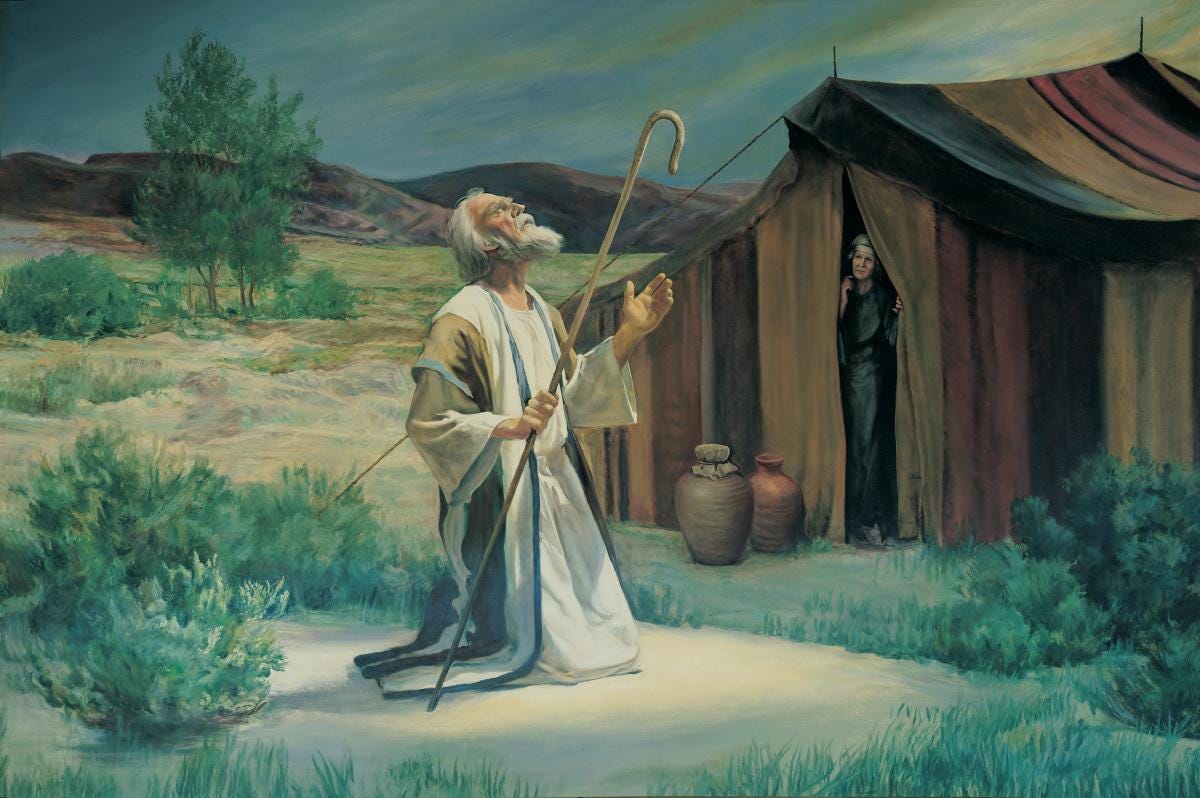
The Genealogies: More Than Just a List: The genealogies leading up to Genesis 12 may seem tedious, but they play an important role. They remind us that Abram's story is part of a larger narrative—a history of people living their lives as expected, generation after generation. But then, Abram's story breaks in and shows that something new is possible. His call is a turning point, not just for him but for the history of faith itself.
What’s in a Name? The name "Abram" means "exalted father," which might have seemed ironic for a man with no children. Yet, this name hints at what was to come—a future that even Abram couldn’t fully see at the time.
Promises That Seemed Unbelievable: God promised Abram land, descendants, and blessing. At the time, these promises seemed almost impossible. But over time, through the nation of Israel and beyond, we see that these promises weren’t just wishful thinking—they were the foundation of a new reality that stretched far beyond Abram’s lifetime.
II. What Made Abram’s God So Different
One God vs. Many Gods: Abram and his family’s tribe practiced polytheism before receiving God's call. Abram’s belief in one God challenged the worldviews of the cultures around him, where many gods ruled over different aspects of life. By following one God, Abram embraced a new way of understanding the world.
A God Who Wanted a Relationship: While the gods of other cultures were often distant and needed to be appeased, Abram’s God was involved in his life, guiding him through direct interaction. This wasn’t about performing rituals to earn favor—it was about building trust and faith.
A God Who Cared About Justice: Abram’s God wasn’t indifferent to how people lived. This God cared deeply about justice, righteousness, and the way people treated each other. This ethical dimension set Abram’s faith apart in a world where gods often didn’t seem to care about human morality.
A God Who Wasn’t Confined to One Place: Unlike the local deities worshiped by other cultures, Abram’s God wasn’t tied to a specific region or people. This was a God with universal reach, who was just as present in a foreign land as He was in Abram’s homeland.
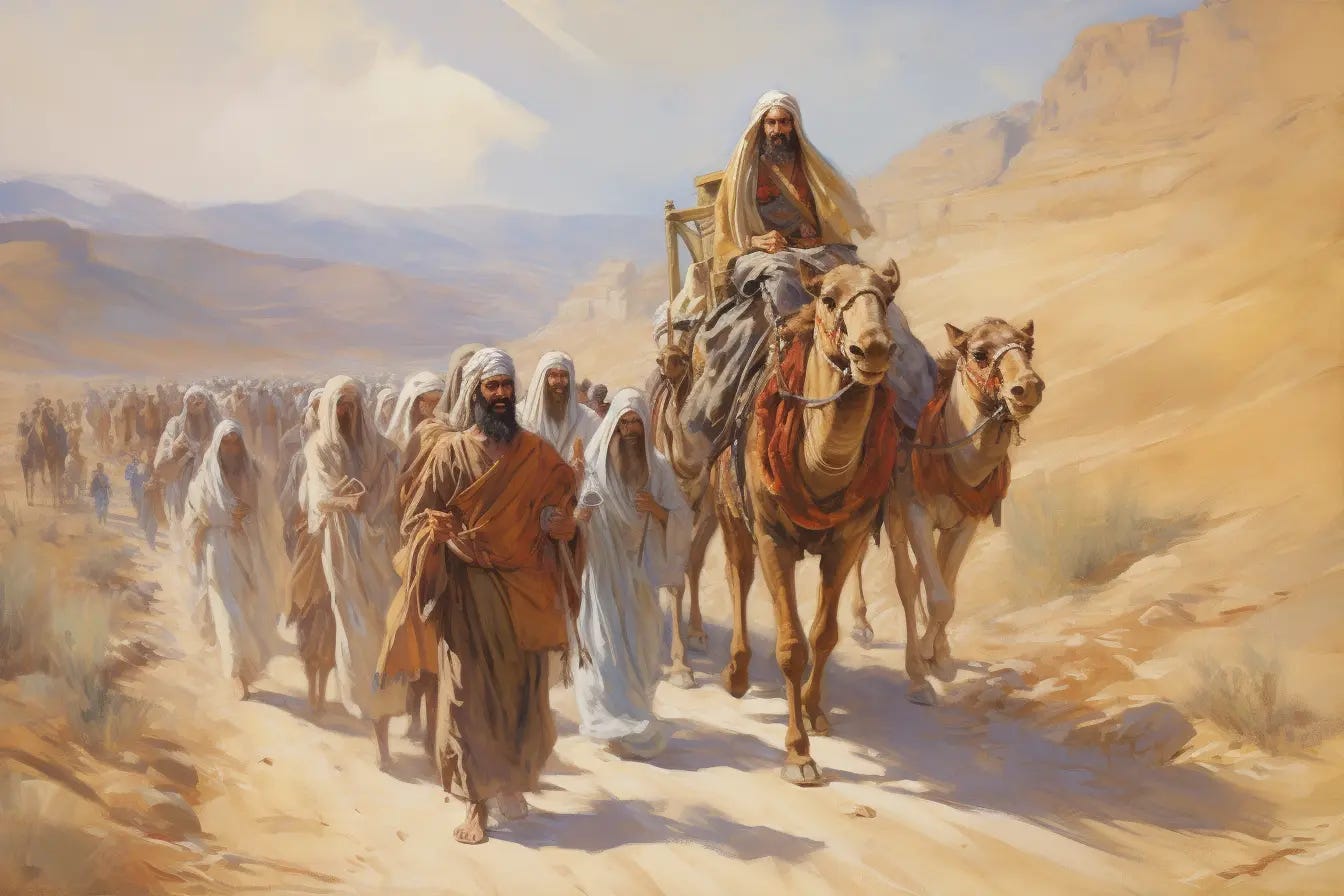
III. Genesis 12-14: A Journey with Many Twists
Leaving the Familiar Behind: Abram’s journey wasn’t just a physical move from one place to another. It was a step into the unknown, leaving behind the familiar and trusting that God would guide him. Along the way, Abram, his wife Sarai, and his nephew Lot faced challenges, including a famine that forced them to seek refuge in Egypt.
A Strange Encounter with Pharaoh: In Egypt, Abram and Sarai found themselves in a complicated situation with Pharaoh, which tested their faith and trust in God’s protection.
Family Tensions: As Abram and Lot’s wealth grew, so did the tension between them. Eventually, they had to part ways, a reminder that prosperity can sometimes create distance in relationships. This separation didn’t just affect their physical location—it also set the stage for future events that would test their bond.
A Risky Rescue Mission: When Lot was caught in the middle of a conflict and taken captive, Abram didn’t hesitate to go after him. This wasn’t just a rescue mission—it was an act of loyalty and courage that would have significant consequences.
IV. Genesis 15: A Covenant Like No Other
The Context of the Covenant:This chapter unfolds after Abram’s military victory over the kings who had captured his nephew Lot and the mysterious encounter with Melchizedek, the king-priest of Salem, in Genesis 14. Abram’s faith had been demonstrated, but questions about the fulfillment of God’s promises remained. Genesis 15 directly addresses these concerns and solidifies the promises God made to Abram.
God’s Reassurance and Abram’s Doubt: The chapter begins with God speaking to Abram in a vision, saying:
"Do not be afraid, Abram. I am your shield, your very great reward." (Genesis 15:1, NIV)
Despite this comforting assurance, Abram expresses concern about his childlessness. He points out that without an heir, his servant Eliezer of Damascus is set to inherit his estate. Abram’s response reveals his anxiety and doubt, despite God’s previous promises of numerous descendants:
"Sovereign Lord, what can you give me since I remain childless and the one who will inherit my estate is Eliezer of Damascus?"
And Abram said, "You have given me no children; so a servant in my household will be my heir." (Genesis 15:2-3, NIV)This interaction shows Abram’s human side—his fears and uncertainties—and sets the stage for a deeper revelation of God’s faithfulness.
God’s Promise of a Son: In response to Abram’s concerns, God reassures him that Eliezer will not be his heir. Instead, God promises Abram a biological son:
"This man will not be your heir, but a son who is your own flesh and blood will be your heir."
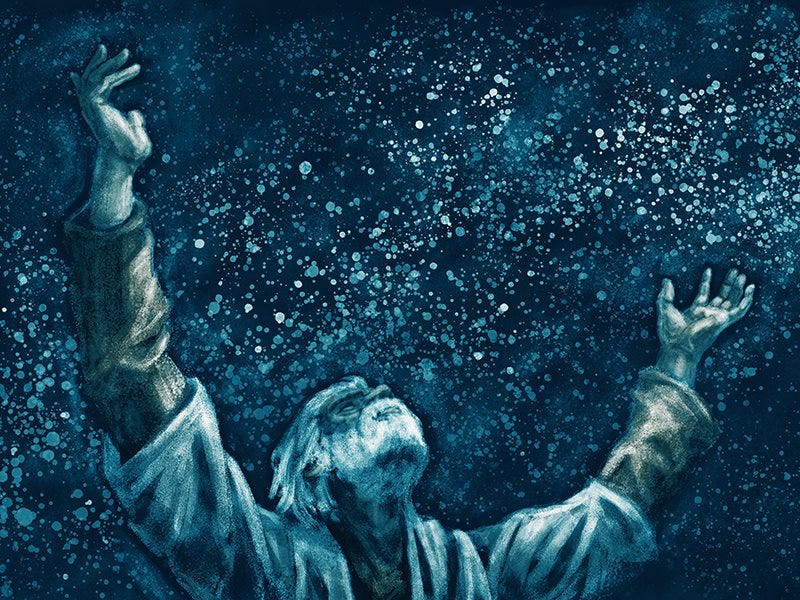
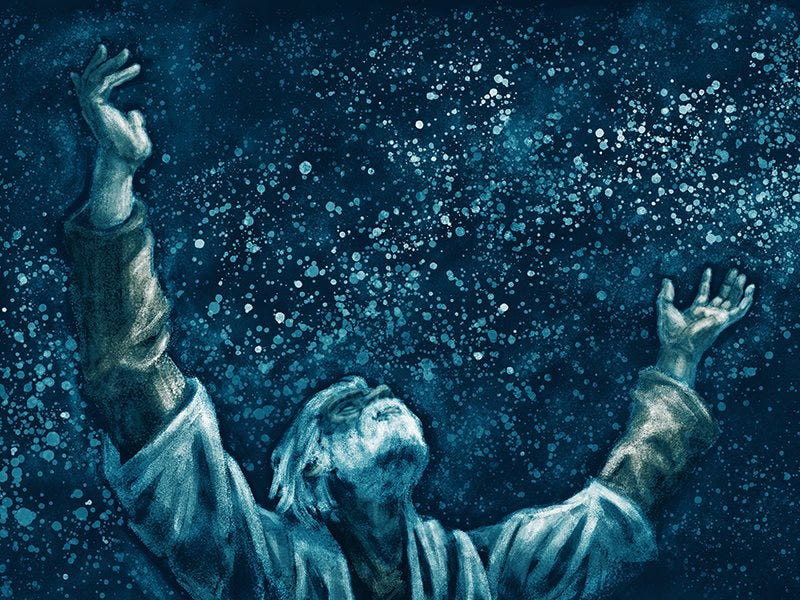
He took him outside and said, "Look up at the sky and count the stars—if indeed you can count them." Then he said to him, "So shall your offspring be." (Genesis 15:4-5, NIV)God’s promise is vivid and expansive, as He invites Abram to look at the stars, symbolizing the countless descendants that will come from him. This promise is not just about the immediate future but extends to the establishment of a nation and beyond.
Abram’s Faith and God’s Righteousness: The next verse defines the essence of faith and its relationship with righteousness:
"Abram believed the Lord, and he credited it to him as righteousness." (Genesis 15:6, NIV)
Abram’s belief, despite the improbability of the promise, is counted as righteousness by God. This verse becomes a cornerstone for later biblical theology, particularly in the New Testament, where it is cited by Paul in Romans and Galatians as the model of faith that justifies and pleases God.
The Covenant Ceremony: Following this declaration of faith, God reaffirms His promise to give Abram the land of Canaan. Abram, however, asks for a sign to confirm this promise:
"Sovereign Lord, how can I know that I will gain possession of it?" (Genesis 15:8, NIV)
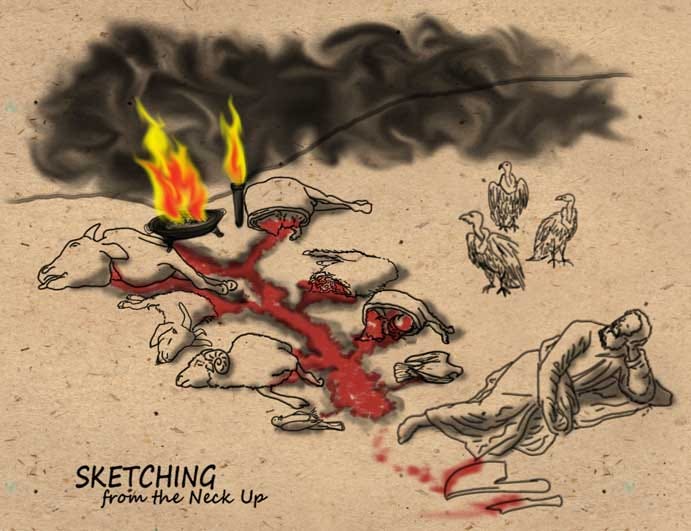
In response, God instructs Abram to prepare a covenant ceremony, a solemn and binding agreement in the ancient Near Eastern tradition. Abram is told to bring specific animals: a heifer, a goat, a ram, a turtledove, and a young pigeon.
"So He said to him, 'Bring Me a three-year-old heifer, a three-year-old female goat, a three-year-old ram, a turtledove, and a young pigeon.' Then he brought all these to Him and cut them in two, down the middle, and placed each piece opposite the other; but he did not cut the birds in two... And it came to pass, when the sun went down and it was dark, that behold, there appeared a smoking oven and a burning torch that passed between those pieces. On the same day the Lord made a covenant with Abram..." — Genesis 15:9-11
What Did Covenants Mean? In the ancient world, a covenant meant a binding agreement symbolized by rituals that carried weight and seriousness. They didn’t have police or insurance companies. How could they trust each other? Covenants were the glue for these early societies.1 They were bloody and not animal-friendly rituals, but the violence served the purpose of keeping order.
An Unlikely Promise: Despite being well past the age of having children, Abram was promised descendants as numerous as the stars. This promise seemed impossible by human standards, but it revealed God’s ability to work beyond the limits of human understanding.
Navigating Doubt: Abram wasn’t immune to doubt. When he questioned how God’s promises would come true, God responded with a covenant ceremony that reassured him of the divine commitment.
The Firepot and the Torch: The appearance of the smoking firepot and blazing torch during the ritual was a powerful symbol of God’s presence. It wasn’t just a sign—it was a declaration that God was taking on the responsibility of the covenant, ensuring that His promises would stand, no matter what.
“When the sun had set and darkness had fallen, a smoking firepot with a blazing torch appeared and passed between the pieces.” — Genesis 15:17 (NIV)
The Ritual That Sealed the Deal: Abram followed the ancient tradition of covenant-making, but the ritual took a surprising turn. Instead of both parties walking between the divided animals, only God passed through. This was God’s way of saying, “I will uphold this covenant, no matter what.”
V. Genesis 16: Hagar and Ishmael
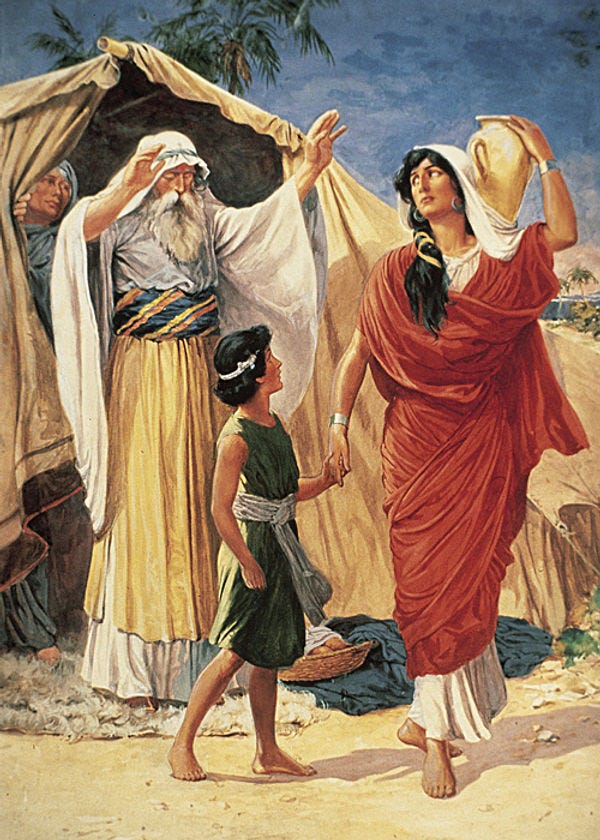
Sarai’s Doubt and the Birth of Ishmael: In Genesis 16, we see the human side of the faith journey as Sarai, Abram's wife (later renamed Sarah), struggles with the apparent delay in God's promise of a child. Despite God's assurance that Abram would have many descendants, Sarai remains barren. Frustrated by her inability to conceive, Sarai suggests that Abram have a child with her Egyptian maidservant, Hagar, as was a customary practice in the ancient Near East when a wife could not bear children.
Hagar’s Conception and Flight: Abram agrees to Sarai's plan, and Hagar becomes pregnant. However, this leads to tension and strife within the household. Once Hagar conceives, she begins to look down on Sarai, which causes Sarai to treat her harshly. Feeling mistreated and distressed, Hagar flees into the desert.
God’s Promise to Hagar: In the desert, Hagar encounters the Angel of the Lord, who instructs her to return to Sarai and submit to her authority. The Angel also makes a significant promise to Hagar: her son will be named Ishmael, meaning "God hears," because God has heard her affliction. Ishmael is also promised to be the father of a great nation, though it is foretold that he will live in conflict with others.
The Birth of Ishmael: Hagar returns to Abram’s household and gives birth to Ishmael when Abram is hella old. Ishmael is Abram’s first son, and his birth introduces complexities into Abram's family dynamics, particularly in light of the later birth of Isaac. Ishmael's story continues to have significant implications, as he is the ancestor of the Arab peoples. Everything going on today in Gaza started long, long ago with this story. Read on to part 2 to hear how their stories unfolded.
The Implications of Genesis 16
Human Initiative vs. Divine Promise: Genesis 16 highlights the tension between human initiative and divine promise. Sarai's decision to have a child through Hagar reflects a lack of trust in God’s timing. While God permits the birth of Ishmael, it becomes clear that God's promise of a covenantal heir will not be fulfilled through human scheming but through God's miraculous intervention.
God’s Care for the Outcast: Hagar’s story also demonstrates God’s compassion and care for the marginalized and oppressed. Even though Hagar was a servant and a foreigner, God hears her cry and promises to make her son a great nation. This encounter in the desert is one of the earliest biblical accounts of God personally intervening on behalf of an individual, showing that His care extends beyond just the chosen family of Abram to all who suffer.
A Complicated Family Dynamic: The birth of Ishmael sets the stage for future tensions between Isaac, the child of promise, and Ishmael, the child born through human effort. These tensions will play out in later chapters, influencing the relationships between their descendants. The chapter serves as a reminder of the complications that arise when humans attempt to take control of God’s promises instead of waiting for His timing.
Abram's story is a profound narrative of faith, trust, and the unfolding of God's promises in ways that challenge human understanding. From his initial call to leave behind the familiar in Genesis 12 to the intricate covenant ceremony in Genesis 15, Abram's journey illustrates a faith that questions tradition, challenges the status quo, and embraces a relationship with a God who is both just and intimately involved in the lives of His people. The story of Hagar and Ishmael in Genesis 16 adds depth to this narrative, highlighting the complexities of human relationships, the consequences of impatience, and God's care for all, even those on the margins.
Click Here for Part 2 and the Conclusion of Abram’s Story.
NSFW explanation of what these rituals involved: The parties would select livestock, cut the animals in half, and arrange the halves opposite each other, creating a pathway between the carcasses. They would then walk through this path while stating the terms of their agreement. This act symbolized their commitment to uphold the covenant, with the implication that breaking the agreement would lead to a fate as severe as that of the sacrificed animals. As they walked between the divided carcasses, the participants would effectively declare, "If I fail to uphold my commitment, may I suffer the same fate as these animals." You can see how this might be an effective motivator for keeping your end of the deal. This is where “cutting a deal” comes from.