

Who was Melchizedek?
Arguably, One of the Most mysterious Figures in the Bible...

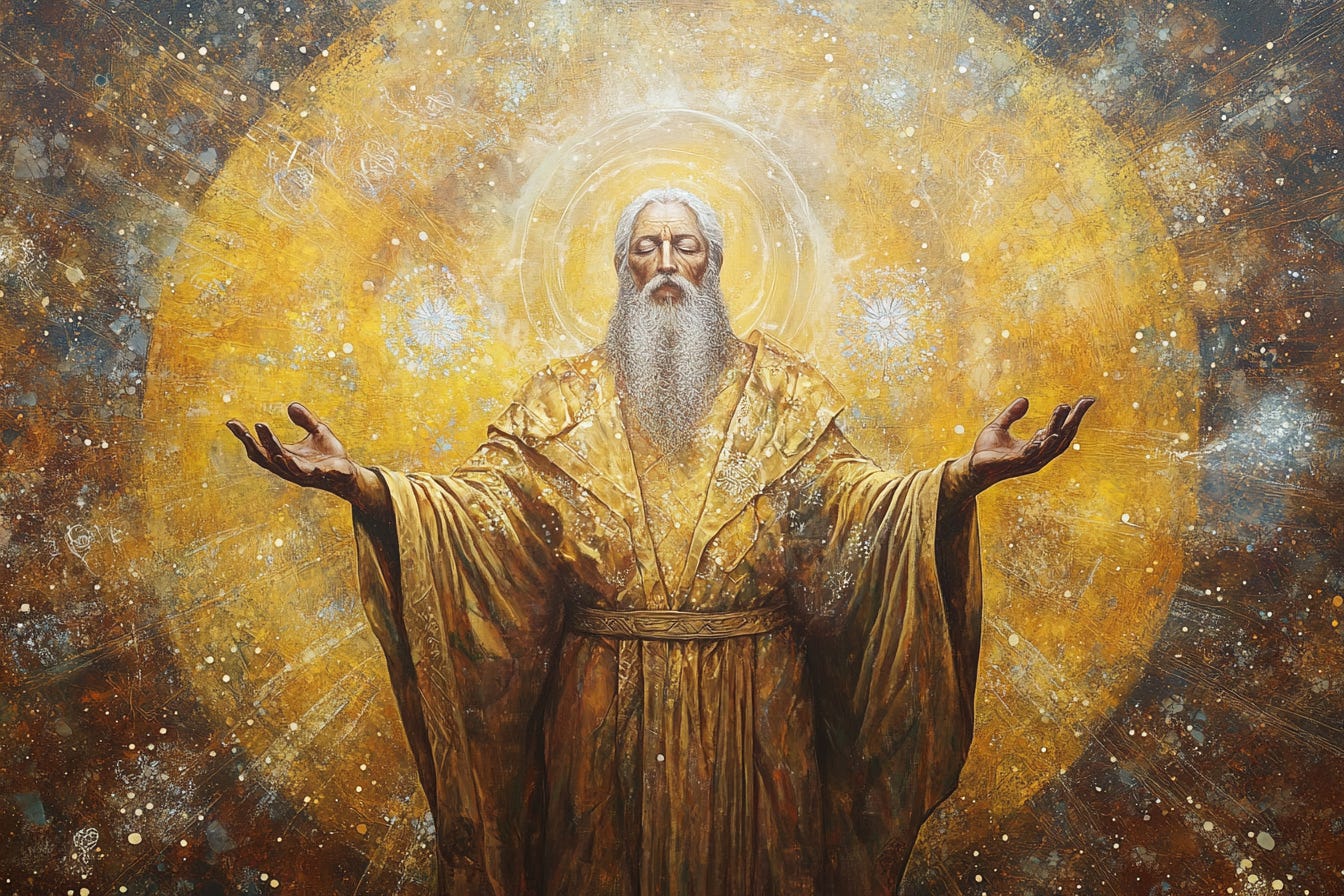
"For this Melchizedek, king of Salem, priest of the Most High God, met Abraham returning from the slaughter of the kings and blessed him, and to him Abraham apportioned a tenth part of everything. He is first, by translation of his name, king of righteousness, and then he is also king of Salem, that is, king of peace. He is without father or mother or genealogy, having neither beginning of days nor end of life, but resembling the Son of God he continues a priest forever."
Hebrews 7:1-3
In the Bible, some figures appear for only a brief moment yet carry profound theological weight. Melchizedek, the mysterious priest-king who encounters Abraham in Genesis, is one such figure. His brief appearance opens the door to deep exploration about kingship, priesthood, and ultimately how his story foreshadows the eternal priesthood of Jesus Christ. Despite being mentioned only a few times in Scripture, Melchizedek's significance reverberates through both the Old and New Testaments.
Melchizedek in Scripture
The first mention of Melchizedek occurs in Genesis 14:18-20, after Abram (later Abraham) rescues his nephew Lot from a coalition of kings.
"And Melchizedek king of Salem brought out bread and wine. (He was priest of God Most High.) And he blessed him and said, 'Blessed be Abram by God Most High, Possessor of heaven and earth; and blessed be God Most High, who has delivered your enemies into your hand!' And Abram gave him a tenth of everything."
Genesis 14:18-20 (First Mention of Melchizedek)
Melchizedek’s role here is fascinating.
He is identified as both the king of Salem (often thought to be an early name for Jerusalem) and a priest of God Most High (El Elyon). This combination of king and priest was unusual in the biblical narrative because, in later Israelite tradition, the roles of king and priest were separate, with kings coming from the tribe of Judah and priests from the tribe of Levi.
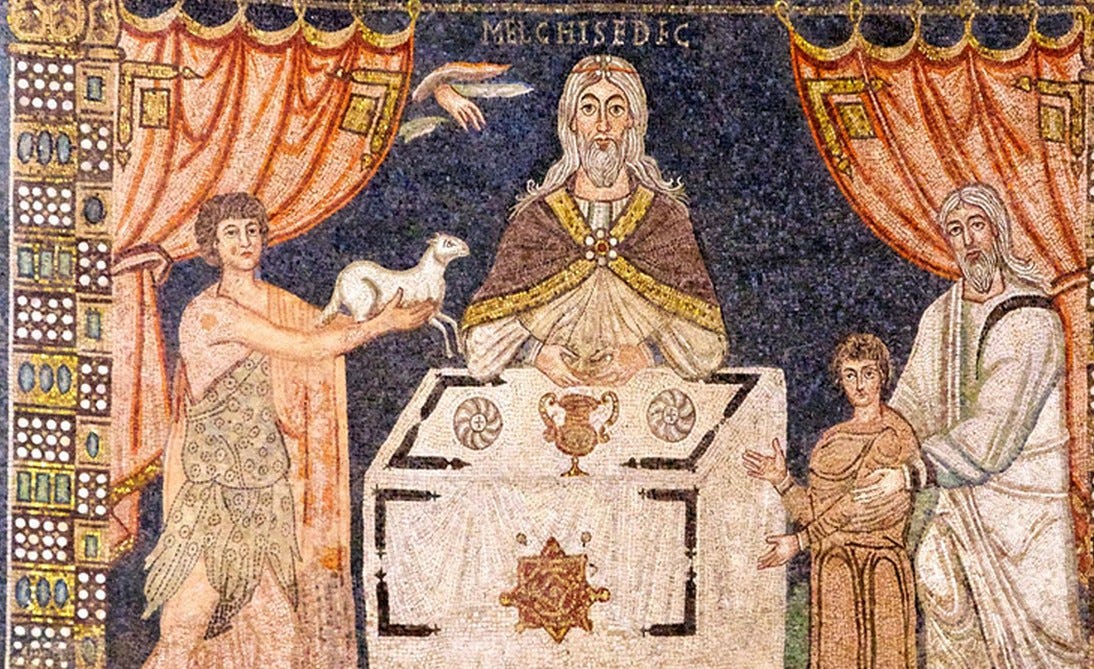
Melchizedek as a Foreshadowing of Christ
The early church, particularly in the New Testament, saw Melchizedek as a foreshadowing of Christ—someone whose role and actions symbolically point to Jesus. This connection is most thoroughly explored in the book of Hebrews, where the author draws out the parallels between Melchizedek and Jesus:
See how great this man was to whom Abraham the patriarch gave a tenth of the spoils! And those descendants of Levi who receive the priestly office have a commandment in the law to take tithes from the people, that is, from their brothers, though these also are descended from Abraham. But this man who does not have his descent from them received tithes from Abraham and blessed him who had the promises. It is beyond dispute that the inferior is blessed by the superior. In the one case tithes are received by mortal men, but in the other case, by one of whom it is testified that he lives. One might even say that Levi himself, who receives tithes, paid tithes through Abraham, for he was still in the loins of his ancestor when Melchizedek met him.
Hebrews 7:3-10
The absence of Melchizedek’s genealogy is particularly striking. In a book like Genesis, where lineage and family heritage are meticulously recorded, Melchizedek’s lack of background emphasizes that his priesthood does not depend on earthly ancestry. This quality foreshadows Christ, whose priesthood, according to Hebrews, is "in the order of Melchizedek"—a priesthood that is eternal, not passed down through generations.
Melchizedek’s actions also foreshadow Christ’s work. He brings bread and wine, which later become central in Christian worship as symbols of Christ’s body and blood. The bread and wine Melchizedek offers Abraham anticipate the Last Supper, where Jesus shares these same elements with his disciples as a representation of the new covenant.
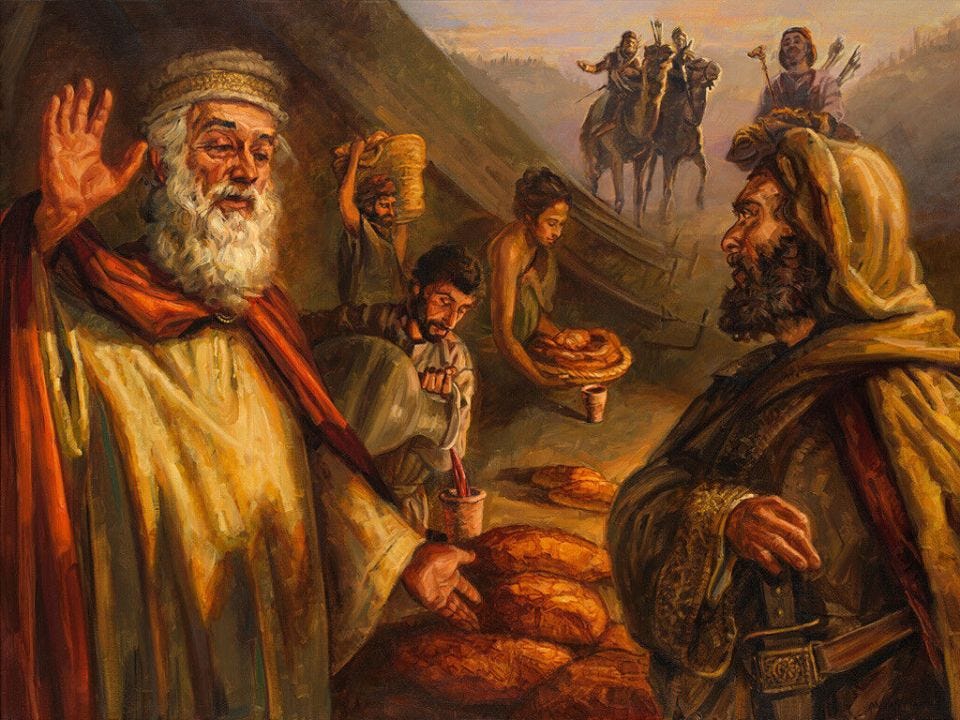
Hebrews further argues that Melchizedek’s priesthood is superior to that of the Levitical priesthood, established later under Moses. In Hebrews 7:4-10, the author points out that Abraham, the father of Israel, gave a tithe to Melchizedek, indicating that Melchizedek was greater than Abraham, and by extension, greater than the Levitical priests who were Abraham’s descendants. This sets up the argument that Jesus, as a priest in the order of Melchizedek, holds a priesthood that is not only eternal but also superior to the old covenant priesthood.
What Does Melchizedek Mean for Us Today?
Melchizedek’s story has lasting relevance, not just as a theological point in understanding Christ but also as a reminder of how God operates outside of human expectations. Melchizedek was a priest of “God Most High” before the formal establishment of Israel’s covenantal relationship with God, showing that God’s work extends beyond specific religious or cultural boundaries. In the same way, Christ’s priesthood is universal, not confined to a particular nation or time.
God often works through people and means we might not anticipate. God's grace and divine connection are available in ways that transcend human expectations.
“Jesus said that his ‘Father is always at his work.’.. So when someone you don’t recognize from outside your religion, family, or tribe shows up with bread and wine and maybe even a blessing, it may be the Most High God, giving you what you need, blessing you, reminding you who you are, and why you’re here.”
—Rob Bell, What is the Bible?